Kwara State Government has reaffirmed its unwavering commitment to strengthening integrated healthcare service delivery across the state in order to promote healthy living and safeguard residents against communicable diseases.
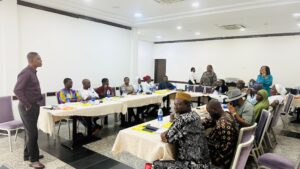
Commissioner for Health, Dr. Amina Ahmed El-Imam, represented by the State AIDS Programme Coordinator, Dr. Muhammad Rasheed, made this known on Monday at the opening ceremony of a three-day training workshop organised by Jhpiego in collaboration with the Ministry of Health under the Advancing integrated health services delivery for Sexual and Reproductive Health and Rights (SRHR) and Communicable Diseases in Nigeria Project.
The training, themed Social and Behaviour Change (SBC), was organised to equip health workers and stakeholders with the necessary knowledge and strategies to improve quality healthcare delivery at Primary Healthcare Centres across the state.
Dr. El-Imam described the programme as timely, impactful, and crucial to the state government’s vision of building a more responsive, accessible, and people-oriented healthcare system.
She noted that the administration remains committed to policies and programmes that will improve access to quality healthcare services, especially for vulnerable groups, adolescents, women, and rural dwellers.
The Commissioner further stressed the importance of integrated healthcare services in tackling communicable diseases and reducing preventable deaths, while also promoting reproductive health and overall community wellbeing.
She commended Jhpiego for partnering with the state government in advancing healthcare delivery and capacity building for health professionals, urging participants to take full advantage of the training by paying close attention to every aspect of the programme.
According to her, the knowledge gained during the workshop would greatly enhance service delivery at healthcare facilities and contribute meaningfully to the attainment of better health outcomes for residents of the state.
Speaking during the workshop, the State Team Lead of Jhpiego, Williams Awotunde, stressed the need for integrated healthcare services for Nigerians accessing care through Primary Healthcare Centres.
He explained that the training was designed to ensure that vulnerable groups, adolescents, and young people have access to comprehensive healthcare services at any Primary Healthcare Centre, particularly for communicable diseases such as tuberculosis, hepatitis, HIV/AIDS, malaria, sexually transmitted infections, as well as antenatal care and family planning services.
Awotunde further disclosed that similar programmes are simultaneously taking place in Anambra, Gombe, Ebonyi, and Kwara states, noting that Asa, Moro, and Offa Local Government Areas were carefully selected in Kwara, with five healthcare facilities chosen in each council area for the programme.
Also speaking, the State Health Educator, Kwara State Ministry of Health, Jibril AbdulKarim, identified socio-cultural, physical, economic, and health system barriers as major factors hindering social behavioural change among the people.
He noted that solutions to such barriers must be people-centred through proper understanding of the common beliefs and realities of the people.
In her remarks, the Community Engagement Officer of Jhpiego, Sharon Gabriel, listed six determinants of social behavioural change to include knowledge, attitude, self-efficacy, social norms, emotions, and environmental factors.
She called for positive attitudinal change to encourage acceptance of integrated healthcare services through what she described as the “behaviour change.”